Mamíferos marinosMarine mammals
Elefante marino del surSouthern elephant seal
Mirounga leonina
Un macho pesa como varios autos y bucea a más de mil metros de profundidad: la única colonia reproductiva de Chile está en una bahía de Tierra del Fuego.A male weighs as much as several cars and dives to more than a thousand meters: Chile's only breeding colony is in a bay of Tierra del Fuego.
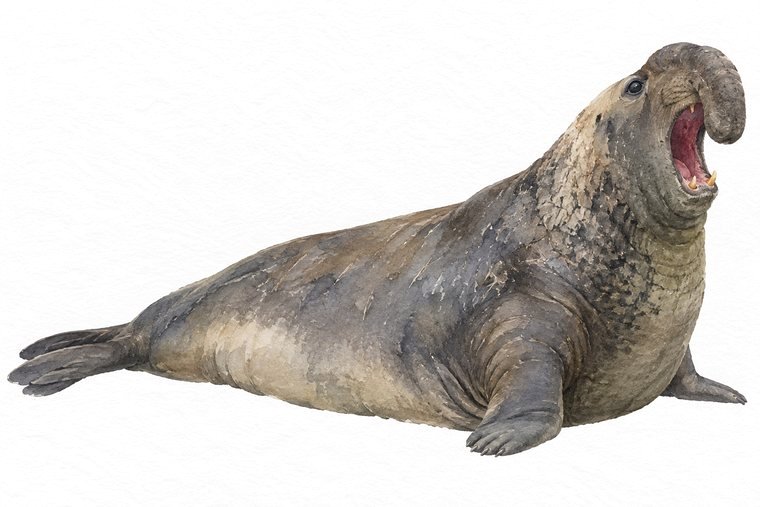
Es el pinnípedo más grande del mundo y la diferencia entre sexos es de las más extremas del reino animal. Un macho adulto puede acercarse a los cinco o seis metros de largo y pesar varias toneladas; una hembra mide alrededor de tres metros y pesa una fracción de eso. Tirado en la playa, un macho parece un bulto de piel gris parda sin forma definida hasta que levanta la cabeza.It is the largest pinniped in the world, and the difference between the sexes is among the most extreme in the animal kingdom. An adult male can approach five or six meters in length and weigh several tons; a female measures about three meters and weighs a fraction of that. Lying on the beach, a male looks like a shapeless mass of gray-brown skin until he raises his head.
La trompa del macho, esa nariz abultada y colgante sobre la boca, es la marca de la especie y le da el nombre. Se infla cuando brama y actúa como caja de resonancia. El cuello y el pecho de los machos adultos son enormes y están cubiertos por una piel gruesa, callosa y llena de cicatrices de peleas, muchas veces casi sin pelo.The male's proboscis, that swollen nose hanging over the mouth, is the mark of the species and gives it its name. It inflates when he bellows and works as a sounding box. The neck and chest of adult males are enormous and covered by thick, calloused skin full of scars from fighting, often almost hairless.
Es una foca verdadera, y eso se nota en tierra: no tiene orejas externas, solo un pequeño orificio detrás del ojo, y sus aletas traseras no rotan hacia adelante. No camina: se arrastra con ondulaciones de todo el cuerpo, un desplazamiento pesado y sorprendentemente rápido en distancias cortas. En el agua, en cambio, es un buceador excepcional.It is a true seal, and that shows on land: it has no external ears, only a small opening behind the eye, and its hind flippers do not rotate forward. It does not walk: it hauls itself along with undulations of the whole body, a heavy and surprisingly fast movement over short distances. In the water, by contrast, it is an exceptional diver.
En Chile la referencia es Bahía Jackson, en el Seno Almirantazgo de Tierra del Fuego, dentro de un área marina protegida y junto al Parque Karukinka: es la colonia reproductiva conocida del país. Los nacimientos se concentran en primavera y en verano las playas se llenan de animales mudando. La colonia sufrió una caída fuerte con el brote de gripe aviar de 2023 y desde entonces los nacimientos han vuelto a subir.In Chile the reference point is Jackson Bay, in Admiralty Sound in Tierra del Fuego, inside a marine protected area and beside Karukinka Natural Park: it is the country's known breeding colony. Births are concentrated in spring, and in summer the beaches fill with molting animals. The colony suffered a sharp fall with the avian influenza outbreak of 2023, and births have been rising again since.
Datos curiososWorth knowing
Buceo extremoExtreme diving
Sus inmersiones habituales duran entre veinte y treinta minutos, y hay registros que superan los mil quinientos metros de profundidad y más de una hora bajo el agua. Es uno de los mamíferos buceadores más capaces que existen.Its usual dives last between twenty and thirty minutes, and there are records beyond fifteen hundred meters deep and more than an hour underwater. It is one of the most capable diving mammals there is.
La muda catastróficaThe catastrophic molt
Una vez al año pierde pelo y piel en placas enteras y queda con un aspecto lamentable durante semanas. Necesita estar en tierra todo ese tiempo porque la muda exige irrigar la piel con sangre caliente.Once a year it sheds hair and skin in whole patches and looks wretched for weeks. It has to stay on land all that time because the molt requires flooding the skin with warm blood.
Oceanógrafos con trompaOceanographers with a proboscis
Investigadores les instalan sensores satelitales que registran temperatura y salinidad en profundidades y zonas donde ningún barco llega. Los elefantes marinos de Tierra del Fuego han aportado datos clave sobre la corriente del Cabo de Hornos.Researchers fit them with satellite sensors that record temperature and salinity at depths and in places no ship reaches. Elephant seals from Tierra del Fuego have supplied key data on the Cape Horn current.
Un golpe y una recuperaciónA blow and a recovery
El brote de gripe aviar de 2023 se llevó cerca de la mitad de los individuos de la colonia de Bahía Jackson. Desde entonces los nacimientos registrados han vuelto a subir.The avian influenza outbreak of 2023 took roughly half the individuals in the Jackson Bay colony. Recorded births have been rising again since.
Cómo reconocerlaHow to recognize it
Un pinnípedo enorme, tirado de costado en una playa del extremo sur, sin orejas visibles y que al moverse se arrastra ondulando en vez de caminar, es un elefante marino. Si además tiene una trompa colgante sobre la boca y el cuello lleno de cicatrices, es un macho adulto. Las hembras y los jóvenes se identifican por el mismo conjunto: sin orejas, aletas traseras dirigidas hacia atrás, ojos grandes y negros, y ese tamaño que ya de por sí descarta a las focas antárticas más esbeltas.A huge pinniped, lying on its side on a beach in the far south, with no visible ears, that hauls itself along in undulations instead of walking, is an elephant seal. If it also has a hanging proboscis over the mouth and a neck full of scars, it is an adult male. Females and young are identified by the same set of features: no ears, hind flippers pointing backward, large black eyes, and a size that by itself rules out the more slender Antarctic seals.
SeñasField marks
Trompa del macho adultoThe adult male's proboscis
Una nariz abultada y colgante que cae sobre la boca y se hincha al bramar. Solo la tienen los machos adultos, y crece con la edad.A swollen nose hanging over the mouth that inflates when he bellows. Only adult males have it, and it grows with age.
Sin orejas externasNo external ears
Solo un pequeño orificio auditivo detrás del ojo, sin pabellón visible. Es lo que lo separa de inmediato de los lobos marinos, que sí tienen orejitas.Only a small ear opening behind the eye, with no visible flap. That is what tells it apart at once from the sea lions, which do have small ears.
Se arrastra, no caminaIt hauls, it does not walk
Las aletas traseras no rotan hacia adelante, así que en tierra avanza ondulando el cuerpo entero como una oruga gigante. Los lobos marinos, en cambio, caminan y hasta trotan.The hind flippers do not rotate forward, so on land it moves by undulating its whole body like a giant caterpillar. Sea lions, by contrast, walk and even trot.
Ojos enormes y negrosEnormous black eyes
Grandes, redondos y muy separados, adaptados a la penumbra de las profundidades donde caza. Destacan en una cara por lo demás poco expresiva.Large, round and widely spaced, adapted to the gloom of the depths where it hunts. They stand out in an otherwise unexpressive face.
Cuello cicatrizado en los machosThe scarred neck of the males
Piel gruesa, callosa y surcada de cicatrices blancas en el cuello y el pecho, resultado de las peleas por el harén.Thick, calloused skin furrowed with white scars on the neck and chest, the result of fights over the harem.
Cuándo verlaWhen to see it
Meses: enero, febrero, septiembre, octubre, noviembre, diciembreMonths: January, February, September, October, November, DecemberDe díaBy dayResidenteResident
Los nacimientos en Bahía Jackson se concentran entre octubre y noviembre, y en verano las playas se llenan de animales en muda. El resto del año la mayoría está en alta mar y las playas quedan casi vacías.Births at Jackson Bay are concentrated between October and November, and in summer the beaches fill with molting animals. The rest of the year most are at sea and the beaches are nearly empty.
Dónde buscarlaWhere to look
Playas de grava y arena protegidas del Seno Almirantazgo, en Tierra del Fuego, donde se ubica la colonia reproductiva de Bahía Jackson, dentro de un área marina protegida y con acceso solo por mar y con operadores autorizados. Fuera de ahí aparecen ejemplares solitarios descansando o mudando en playas aisladas de Magallanes, y muy ocasionalmente más al norte. Busca bultos oscuros e inmóviles sobre la grava por encima de la línea de marea alta.Sheltered gravel and sand beaches of Admiralty Sound, in Tierra del Fuego, where the Jackson Bay breeding colony lies, inside a marine protected area reached only by sea and with authorized operators. Outside it, lone animals turn up resting or molting on remote beaches in Magallanes, and very occasionally farther north. Look for dark, motionless mounds on the gravel above the high-tide line.
No la confundas conDo not confuse it with
Lobo marino comúnSouth American sea lion
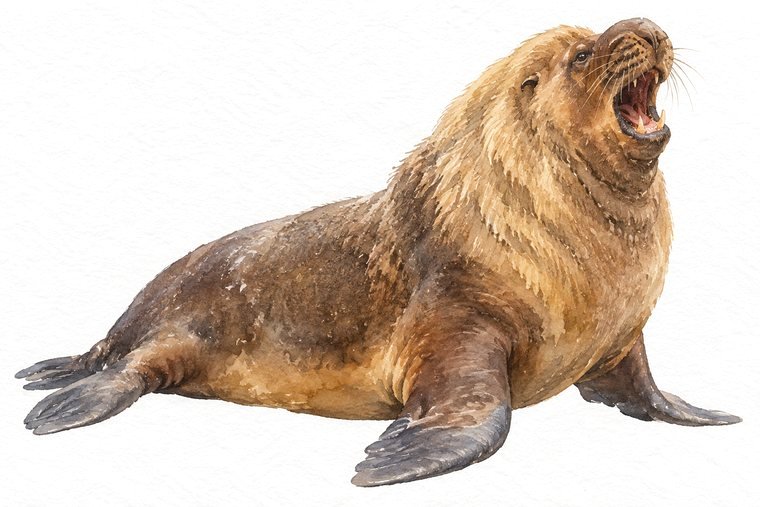
Ambos son pinnípedos grandes que se tumban en playas y roqueríos del sur de Chile, y los machos de ambas especies tienen cuellos muy desarrollados. El lobo marino tiene orejitas externas visibles y puede girar las aletas traseras hacia adelante para caminar y hasta trotar. El elefante marino no tiene orejas y en tierra solo se arrastra ondulando el cuerpo, y es varias veces más grande.Both are large pinnipeds that lie on beaches and rocky shores in southern Chile, and the males of both species have very heavy necks. The sea lion has visible external ears and can turn its hind flippers forward to walk and even trot. The elephant seal has no ears and on land only hauls itself along undulating, and it is several times larger.
Ver su fichaSee its sheet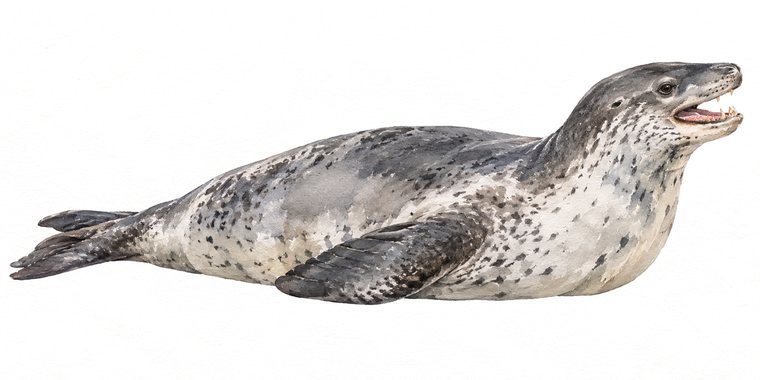
Foca leopardoLeopard seal
Las dos son focas verdaderas grandes, sin orejas externas, que aparecen en playas y hielos del extremo sur. La foca leopardo es esbelta y serpentiforme, con una cabeza grande y aplanada de aspecto reptiliano, cuello largo y flexible y manchas oscuras en la garganta. El elefante marino es voluminoso, de cuello grueso y corto, y el macho lleva trompa.Both are large true seals, without external ears, that appear on beaches and ice in the far south. The leopard seal is slender and serpentine, with a large flattened head of reptilian look, a long flexible neck and dark spots on the throat. The elephant seal is bulky, with a thick short neck, and the male carries a proboscis.
Ver su fichaSee its sheetFoca de Weddell
Ambas son focas robustas de tonos grises que descansan tumbadas y quietas durante horas. La de Weddell tiene la cabeza pequeña y redonda con hocico corto y una expresión de boca curvada hacia arriba, y no supera los tres metros. Le falta por completo la trompa y el volumen desmesurado del elefante marino.Both are robust gray-toned seals that rest lying still for hours. The Weddell seal has a small round head with a short muzzle and a mouth curved upward, and does not exceed three meters. It lacks entirely the proboscis and the sheer bulk of the elephant seal.
Más sobre esta especieMore about this species+
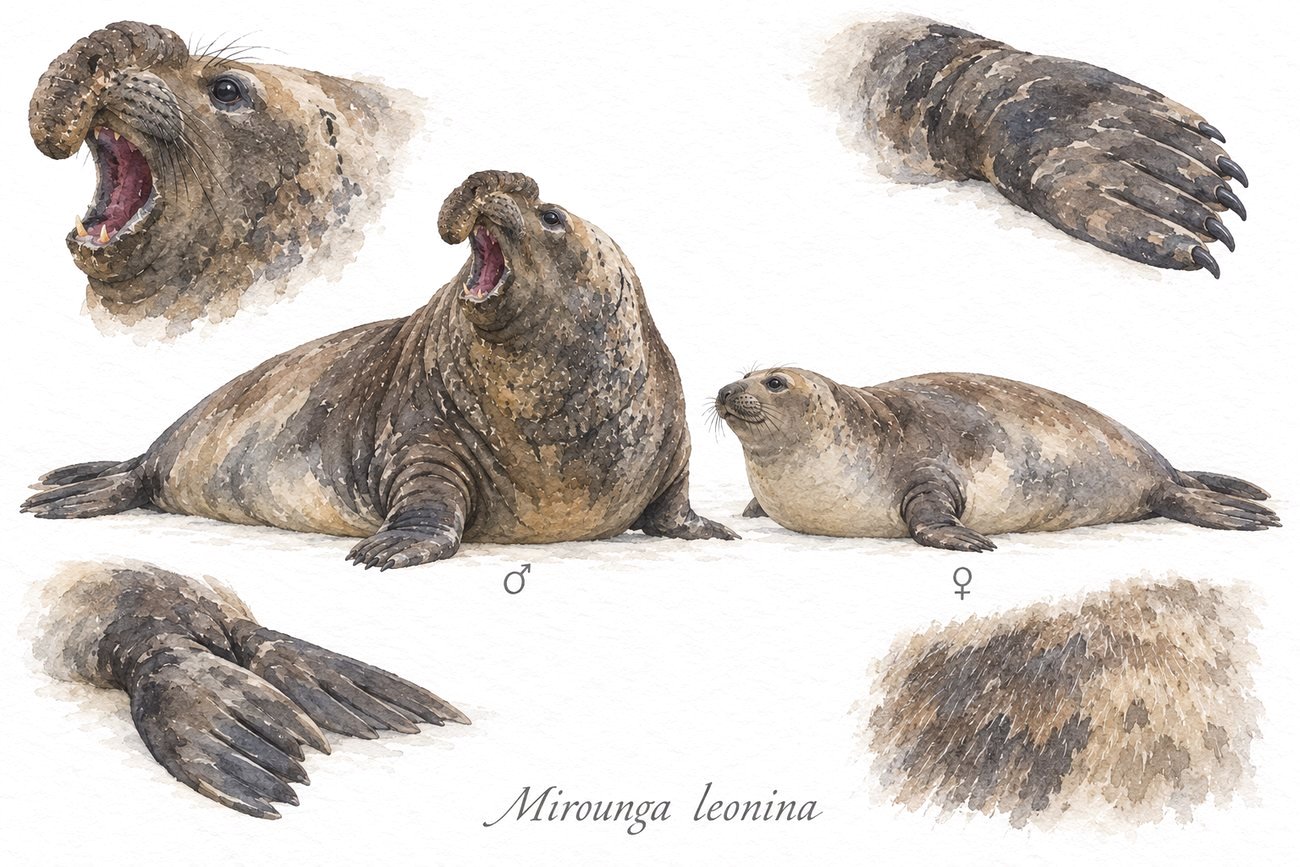
Macho y hembraMale and female
Extremo, de los mayores del reino animal: un macho adulto puede pesar varias veces lo que una hembra y lleva una trompa que ella no tiene. Si tienes dudas frente a un animal grande sin trompa, lo más probable es que sea una hembra o un macho joven, no otra especie.Extreme, among the greatest in the animal kingdom: an adult male can weigh several times what a female does and carries a proboscis she does not have. If you are unsure in front of a large animal without a proboscis, it is most likely a female or a young male, not another species.
MachoMale
Hasta cinco o seis metros y varias toneladas. Trompa inflable colgante sobre la boca, cuello y pecho enormes con piel gruesa, cicatrizada y casi sin pelo, y un bramido gutural que se oye a distancia.Up to five or six meters and several tons. An inflatable proboscis hanging over the mouth, an enormous neck and chest with thick, scarred and almost hairless skin, and a guttural bellow heard at a distance.
HembraFemale
Alrededor de tres metros y mucho menos peso. Hocico redondeado y liso, sin trompa, cuello sin engrosar ni cicatrices, y aspecto general más estilizado.About three meters and far less weight. A rounded, smooth muzzle, no proboscis, a neck without thickening or scars, and an altogether more streamlined look.
JuvenilJuvenile
Las crías nacen negras y en pocas semanas mudan a un pelaje gris plateado. Los machos jóvenes todavía no tienen trompa desarrollada y pueden confundirse con hembras grandes; la trompa aparece gradualmente con los años.Pups are born black and within a few weeks molt into a silver-gray coat. Young males have no developed proboscis yet and can be mistaken for large females; the proboscis appears gradually over the years.
Según la épocaBy season
Una vez al año atraviesan la muda catastrófica: pierden pelo y capas de piel en placas y quedan manchados, pelados y de aspecto enfermo durante semanas, apilados en las playas. Es un proceso normal y no hay que reportarlos como animales enfermos.Once a year they go through the catastrophic molt: they shed hair and layers of skin in patches and are left blotched, bare and sickly-looking for weeks, piled up on the beaches. It is a normal process and they should not be reported as sick animals.
VozVoice
El macho emite un bramido gutural profundo, una sucesión de golpes roncos amplificados por la trompa, que funciona como aviso a otros machos y se oye desde lejos. Las hembras y las crías se llaman con gruñidos y balidos que les permiten reencontrarse entre cientos de animales apilados en la playa.The male gives a deep guttural bellow, a run of hoarse blows amplified by the proboscis, which serves as a warning to other males and is heard from far off. Females and pups call to each other with grunts and bleats that let them find one another among hundreds of animals piled on the beach.
ComportamientoBehaviour
Pasa la mayor parte del año en alta mar buceando casi de forma continua, y solo sale a tierra para reproducirse y para mudar. En la playa forma agrupaciones densas donde los machos dominantes defienden un grupo de hembras: se yerguen pecho contra pecho, braman y se golpean con el cuello, dejándose cicatrices profundas. Fuera de esos enfrentamientos pasa la mayor parte del tiempo inmóvil, a veces cubriéndose de arena con las aletas.It spends most of the year at sea diving almost continuously, and comes ashore only to breed and to molt. On the beach it forms dense gatherings where dominant males defend a group of females: they rear up chest to chest, bellow and strike each other with their necks, leaving deep scars. Outside those confrontations it spends most of its time motionless, sometimes flicking sand over itself with its flippers.
DietaDiet
Calamares y peces de aguas profundas, capturados en inmersiones prolongadas lejos de la costa. Durante la temporada reproductiva en tierra prácticamente no come: los machos pueden pasar semanas sin alimentarse mientras defienden su grupo de hembras, y viven de la grasa acumulada.Squid and deep-water fish, caught on long dives far from shore. During the breeding season on land it practically does not eat: males can go weeks without feeding while defending their group of females, living off stored blubber.
ReproducciónBreeding
Sistema de harenes. Un macho dominante controla el acceso a un grupo de hembras y desplaza a los rivales. Cada hembra pare una sola cría tras una gestación de casi un año, y la amamanta durante unas tres semanas con una leche extraordinariamente grasa: la cría multiplica su peso en ese lapso mientras la madre lo pierde. Después la hembra vuelve al mar y la cría queda sola en la playa, ayunando y aprendiendo a nadar por su cuenta.A harem system. A dominant male controls access to a group of females and drives off rivals. Each female bears a single pup after a gestation of almost a year, and nurses it for about three weeks on extraordinarily fatty milk: the pup multiplies its weight in that time while the mother loses hers. Then the female returns to the sea and the pup is left alone on the beach, fasting and learning to swim on its own.
Origen del nombreWhere the name comes from
El nombre común viene de la trompa del macho y del tamaño descomunal del animal. El género Mirounga deriva de un nombre aborigen australiano para la especie, y el epíteto leonina alude al bramido, que a los primeros naturalistas les recordó el rugido de un león.The common name comes from the male's proboscis and from the animal's outsized bulk. The genus Mirounga derives from an Aboriginal Australian name for the species, and the epithet leonina alludes to the bellow, which reminded the first naturalists of a lion's roar.
Mitos y erroresMyths and mistakes
Se le dice foca a todo pinnípedo y lobo marino al elefante marino. La diferencia es visible: el elefante marino es una foca verdadera, sin orejas externas y sin capacidad de girar las aletas traseras para caminar. Otra creencia difundida es que la trompa sirve para respirar bajo el agua; no es un tubo respirador, sino una caja de resonancia que amplifica el bramido y que además ayuda a recuperar humedad al exhalar. Y un animal en muda, pelado y manchado, no está enfermo ni necesita ayuda.Every pinniped gets called a seal, and the elephant seal gets called a sea lion. The difference is visible: the elephant seal is a true seal, with no external ears and no ability to turn its hind flippers to walk. Another widespread belief is that the proboscis is for breathing underwater; it is not a snorkel but a sounding box that amplifies the bellow and also helps recover moisture on exhaling. And an animal in molt, bare and blotched, is neither ill nor in need of help.
AmenazasThreats
Figura como Preocupación Menor a escala global, pero las colonias chilenas son pequeñas y vulnerables. Los brotes de gripe aviar de alta patogenicidad golpearon con fuerza a las poblaciones australes, y a eso se suman el enmalle en artes de pesca y basura marina, la perturbación de las playas de cría por acercamiento excesivo de embarcaciones y visitantes, las colisiones con embarcaciones y los cambios en la disponibilidad de presas en profundidad.It is listed as Least Concern on a global scale, but the Chilean colonies are small and vulnerable. Outbreaks of highly pathogenic avian influenza hit the southern populations hard, and to that are added entanglement in fishing gear and marine litter, disturbance of the breeding beaches by boats and visitors coming too close, collisions with vessels, and changes in the availability of prey at depth.
Ficha técnicaTechnical sheet+
- Otros nombresOther names
- Elefante marino (Chile), Southern Elephant Seal (inglés)Elefante marino (Chile), Southern Elephant Seal (English)
- FamiliaFamily
- Phocidae · Orden:Order: Carnivora
- OrigenOrigin
- Nativa de Chile y ArgentinaNative to Chile and Argentina
- Estado de conservaciónConservation status
- Chile: Vulnerable · RCE (2017)
- Estado de conservaciónConservation status
- Argentina: No amenazada · Res. 316/2021 (2021)Argentina: Not threatened · Res. 316/2021 (2021)
- Dónde viveWhere it lives
- Chile · Regiones: Antofagasta, La Araucanía, Atacama, Aysén, Biobío, Coquimbo, Los Lagos, Los Ríos, Magallanes, Maule, Ñuble, O'Higgins y ValparaísoChile · Regions: Antofagasta, La Araucanía, Atacama, Aysén, Biobío, Coquimbo, Los Lagos, Los Ríos, Magallanes, Maule, Ñuble, O'Higgins and Valparaíso
- Dónde viveWhere it lives
- Argentina · Provincias: Chubut y Tierra del FuegoArgentina · Provinces: Chubut and Tierra del Fuego
6 fuentes6 sources+
- Estado de conservación en Chile:Conservation status in Chile: DS 29/2011 MMA (Reglamento); nómina consolidada del 20.º proceso, 8-jun-2026
- Estado de conservación en Argentina:Conservation status in Argentina: Resolución MAyDS 316/2021, Anexo I (Boletín Oficial, 24-sep-2021)
- Distribución: GBIF (gbif_cubo_abiertas_2026-10) y RCE (Ministerio del Medio Ambiente de Chile) (rce_mma_2026-03)Distribution: GBIF (gbif_cubo_abiertas_2026-10) and RCE (Ministerio del Medio Ambiente de Chile) (rce_mma_2026-03)
- Retrato: ilustración de Explora, generada con IA y revisada por el equipo.Portrait: illustration by Explora, generated with AI and reviewed by the team.
- Lámina: ilustración de Explora, generada con IA y revisada por el equipo.Plate: illustration by Explora, generated with AI and reviewed by the team.
- Texto: Explora, redactado con asistencia de IA.Text: Explora, written with AI assistance.
Otras de mamíferos marinosMore marine mammals