Mamíferos terrestresLand mammals
Guanaco
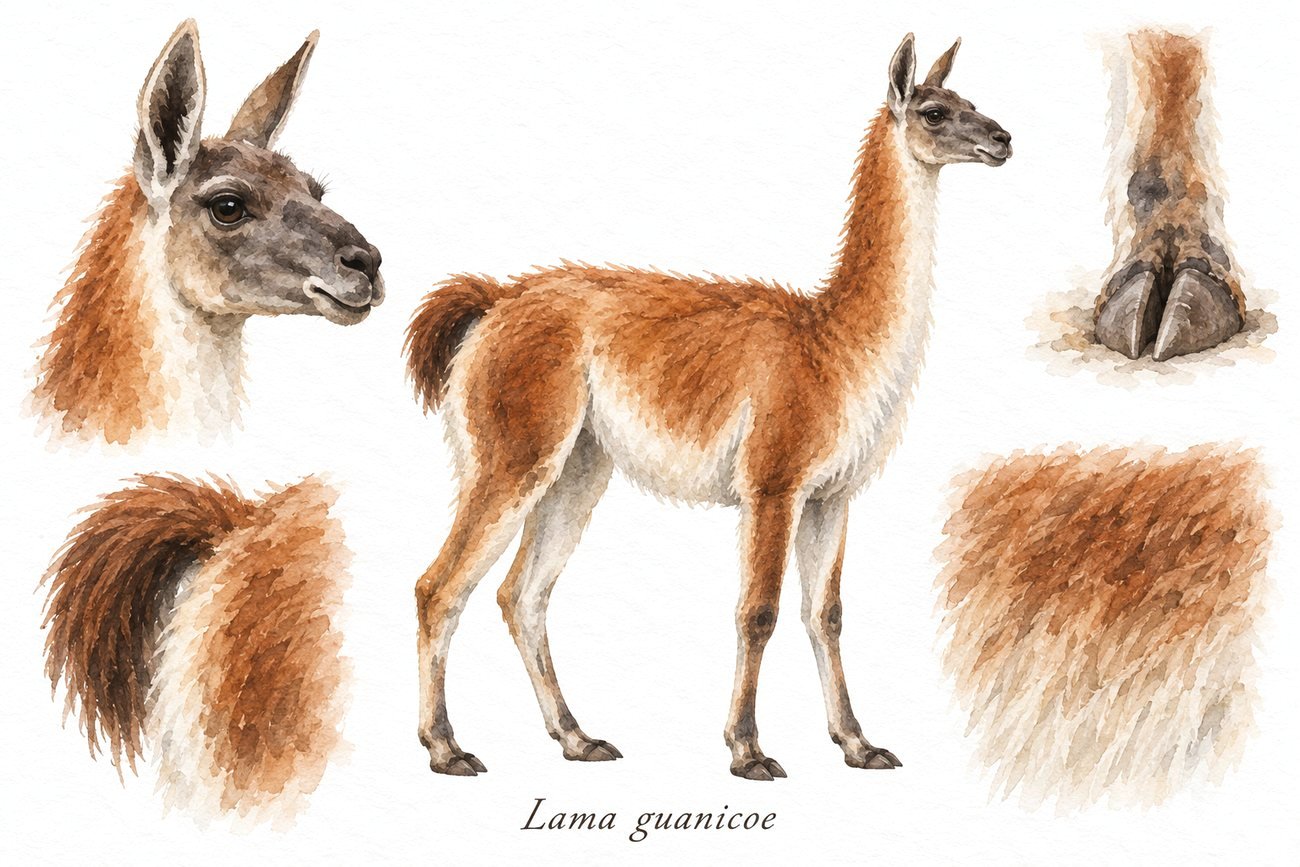
Lama guanicoe
El mamífero grande que más vas a ver en la estepa de Magallanes y Tierra del Fuego: si algo te observa desde una loma, probablemente es un guanaco.The large mammal you are most likely to see on the steppe of Magallanes and Tierra del Fuego: if something is watching you from a rise, it is probably a guanaco.
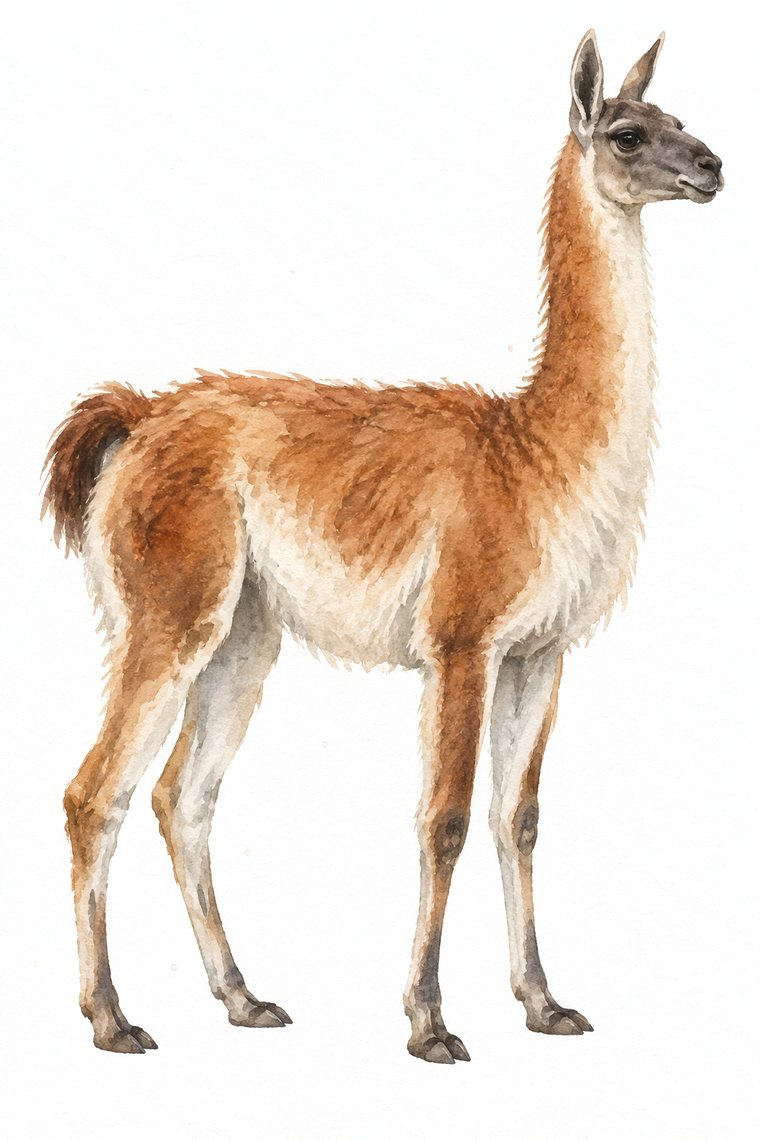
El guanaco es el camélido silvestre más grande de Sudamérica y el pariente salvaje de la llama. Es esbelto, de cuello largo y patas finas, con un pelaje lanoso pardo canela en el lomo que contrasta de forma nítida con el vientre blanco, y una cabeza gris a negruzca con orejas largas y muy móviles.The guanaco is the largest wild camelid in South America and the wild relative of the llama. It is slender, long-necked and fine-legged, with a woolly cinnamon-brown coat on the back that contrasts sharply with the white belly, and a gray to blackish head with long, very mobile ears.
Vive desde el altiplano del norte hasta Tierra del Fuego, pero es en la Patagonia austral donde se vuelve un animal de todos los días: en la estepa fueguina y en el norte de Magallanes se ven grupos grandes pastando junto a los caminos, a veces mezclados con ovejas. También entra en los bordes de bosque de ñirre y lenga.It lives from the northern altiplano to Tierra del Fuego, but it is in southern Patagonia that it becomes an everyday animal: on the Fuegian steppe and in northern Magallanes you see large groups grazing beside the roads, sometimes mixed in with sheep. It also comes into the edges of ñirre and lenga forest.
Vive en grupos familiares de un macho con varias hembras y sus crías, en tropillas de machos solteros y en machos solitarios. Es un animal alerta: un individuo suele quedar de vigía en alto mientras el resto come, y ante el peligro lanza un relincho agudo y entrecortado y el grupo sale al trote en fila.It lives in family groups of one male with several females and their young, in troops of bachelor males and as lone males. It is an alert animal: one individual usually stands sentry on high ground while the rest feed, and at any danger it gives a sharp, broken whinny and the group moves off at a trot in single file.
Datos curiososWorth knowing
Letrinas comunitariasCommunal latrines
Los guanacos defecan en bosteaderos fijos que usa todo el grupo. Estos montículos marcan territorio y concentran nutrientes que cambian la vegetación a su alrededor.Guanacos defecate at fixed dung heaps used by the whole group. These mounds mark territory and concentrate nutrients that change the vegetation around them.
Glóbulos para la alturaBlood cells for altitude
Como los demás camélidos sudamericanos, tiene glóbulos rojos ovalados y una sangre muy eficiente para captar oxígeno, lo que le permite vivir tanto al nivel del mar en Tierra del Fuego como a más de 4.000 m en el norte.Like the other South American camelids, it has oval red blood cells and blood that is very efficient at taking up oxygen, which lets it live both at sea level in Tierra del Fuego and above 4,000 m in the north.
Un mismo animal, dos mundosOne animal, two worlds
En la Isla Grande de Tierra del Fuego no hay pumas, mientras que en el continente el puma es su principal depredador; por eso los guanacos fueguinos enfrentan sobre todo a perros asilvestrados.On the Isla Grande de Tierra del Fuego there are no pumas, while on the mainland the puma is its main predator; Fuegian guanacos therefore face feral dogs above all.
Cómo reconocerlaHow to recognize it
Camélido grande y estilizado, de 1 a 1,3 m a la cruz, con lomo y flancos pardo canela, vientre y cara interna de las patas blancos y un corte neto entre ambos colores. La cabeza es gris oscura, las orejas largas y puntiagudas. En la Patagonia austral no hay otro camélido silvestre, así que un animal así en la estepa es un guanaco.A large, streamlined camelid, 1 to 1.3 m at the shoulder, with back and flanks cinnamon brown, belly and inner legs white, and a clean break between the two colors. The head is dark gray, the ears long and pointed. In southern Patagonia there is no other wild camelid, so an animal like this on the steppe is a guanaco.
SeñasField marks
Dos colores bien cortadosTwo colors cleanly cut
Dorso pardo canela y vientre blanco, con una línea de separación nítida en los flancos.Cinnamon-brown back and white belly, with a sharp dividing line along the flanks.
Cabeza gris oscuraDark gray head
La cara es gris a negruzca, más oscura que el cuello, con orejas largas y puntiagudas que mueve todo el tiempo.The face is gray to blackish, darker than the neck, with long pointed ears that move constantly.
Vigía en altoA sentry on high ground
En los grupos suele haber un animal parado en una loma o un punto alto mirando hacia ti mientras los demás pastan.In a group there is usually one animal standing on a rise or a high point watching you while the others graze.
Relincho de alarmaAlarm whinny
Un relincho agudo y repetido, parecido a una risa, que avisa al grupo antes de huir.A sharp, repeated whinny, like a laugh, that warns the group before it flees.
BosteaderosDung heaps
Montículos de excremento en forma de bolitas que el grupo usa siempre en el mismo lugar; delatan su presencia aunque no los veas.Mounds of pellet droppings that the group always uses in the same place; they give away its presence even when you do not see the animals.
Cuándo verlaWhen to see it
Todo el añoAll yearDe díaBy dayResidenteResident
Se ve todo el año. Entre noviembre y febrero es la época de chulengos. En invierno los grupos bajan a zonas con menos nieve y se juntan más cerca de los caminos.It is seen all year. Between November and February is the season of chulengos. In winter the groups come down to areas with less snow and gather closer to the roads.
Dónde buscarlaWhere to look
Estepa abierta de coirón en el norte de Tierra del Fuego y en el norte de Magallanes, sobre todo en lomajes con buena vista; vegas y bordes de lagunas donde baja a comer pasto tierno; bordes de bosque de ñirre. En Torres del Paine es fácil verlo en las pampas del sector oriental, y desde los caminos de ripio de la Isla Grande de Tierra del Fuego.Open tussock steppe in northern Tierra del Fuego and northern Magallanes, above all on rises with a good view; wet meadows and the edges of lagoons where it comes down for fresh grass; the edges of ñirre forest. In Torres del Paine it is easy to see on the pampas of the eastern sector, and from the gravel roads of the Isla Grande de Tierra del Fuego.
No la confundas conDo not confuse it with
Vicuña
Mismo patrón de dorso canela y vientre blanco. La vicuña es mucho más pequeña y delicada, de color canela más claro y uniforme, con una mancha de pelo blanco largo en el pecho y la cara del mismo color que el cuello, no gris oscura. Además vive sólo en el altiplano del norte: en Magallanes no hay vicuñas.The same pattern of cinnamon back and white belly. The vicuña is much smaller and more delicate, a paler and more uniform cinnamon, with a patch of long white hair on the chest and a face the same color as the neck, not dark gray. It also lives only on the northern altiplano: there are no vicuñas in Magallanes.
Llama
Es la forma doméstica derivada del guanaco y tiene la misma silueta. La llama tiene colores muy variables (blanca, negra, manchada, café) y no el patrón fijo canela y blanco del guanaco, y suele estar en corrales o junto a casas. En la Patagonia austral prácticamente sólo verás llamas en estancias o criaderos.It is the domestic form derived from the guanaco and has the same outline. The llama comes in highly variable colors (white, black, piebald, brown) and not the guanaco's fixed cinnamon and white, and is usually in corrals or beside houses. In southern Patagonia you will practically only see llamas on estancias or in breeding yards.
Más sobre esta especieMore about this species+
Macho y hembraMale and female
Macho y hembra son prácticamente iguales en color y forma; a distancia no se pueden separar por el aspecto. Lo que ayuda es la conducta: el macho del grupo familiar es el que vigila, persigue a otros machos y se pone entre el grupo y el intruso.Male and female are practically identical in color and shape; at a distance they cannot be separated by looks. What helps is behavior: the male of the family group is the one that keeps watch, chases other males and places himself between the group and the intruder.
JuvenilJuvenile
La cría, que en Chile y Argentina se llama chulengo, tiene el mismo patrón de colores pero el pelo más largo y esponjoso, la cabeza proporcionalmente grande y patas que parecen demasiado largas. Nace a fines de la primavera y en verano se ve trotando pegada a la madre.The young, called a chulengo in Chile and Argentina, has the same color pattern but longer, fluffier hair, a proportionally large head and legs that look too long. It is born in late spring and in summer is seen trotting close to its mother.
VozVoice
El llamado más común es un relincho agudo y entrecortado, como una risa, que funciona de alarma. Los chulengos y sus madres se comunican con zumbidos suaves.The commonest call is a sharp, broken whinny, like a laugh, which works as an alarm. Chulengos and their mothers communicate with soft humming.
ComportamientoBehaviour
Diurno. Pasa el día pastando y rumiando, con un vigía atento. Los machos de grupos familiares defienden un territorio, persiguen a otros machos a la carrera y pelean mordiéndose las patas y el cuello. Cuando se siente acosado escupe contenido del estómago. Corre con soltura por laderas empinadas y puede nadar para cruzar ríos.Diurnal. It spends the day grazing and chewing the cud, with a sentry on watch. Males of family groups defend a territory, chase other males at a run and fight by biting at legs and neck. When it feels harassed it spits stomach contents. It runs easily over steep slopes and can swim to cross rivers.
DietaDiet
Herbívoro rumiante. Come pastos, hierbas y arbustos de la estepa, y en el bosque ramonea brotes de ñirre y lenga. Puede pasar bastante tiempo sin beber y aprovecha la humedad de la vegetación.A herbivorous ruminant. It eats grasses, herbs and shrubs of the steppe, and in the forest it browses on ñirre and lenga shoots. It can go a good while without drinking and makes use of the moisture in the vegetation.
ReproducciónBreeding
Las crías nacen en general entre fines de la primavera y comienzos del verano, una por parto, tras una gestación cercana a un año. El chulengo se pone de pie y camina muy poco después de nacer, lo que le permite seguir al grupo desde el primer día.The young are generally born between late spring and early summer, one per birth, after a gestation of close to a year. The chulengo stands and walks very soon after being born, which lets it follow the group from the first day.
Origen del nombreWhere the name comes from
Guanaco viene del quechua wanaku. El nombre científico Lama guanicoe combina el término andino para estos camélidos con una latinización del mismo nombre quechua.Guanaco comes from the Quechua wanaku. The scientific name Lama guanicoe combines the Andean term for these camelids with a Latinized form of the same Quechua name.
Mitos y erroresMyths and mistakes
Es común pensar que la llama y el guanaco son lo mismo. La llama es un animal doméstico derivado del guanaco por selección humana; el guanaco es la especie silvestre y en la Patagonia austral no hay llamas en libertad.It is common to think the llama and the guanaco are the same thing. The llama is a domestic animal derived from the guanaco by human selection; the guanaco is the wild species, and in southern Patagonia there are no llamas living free.
AmenazasThreats
Históricamente fue cazado y desplazado por la ganadería ovina, con la que compite por el pasto. Hoy sufre atropellos y enredos en alambrados, que son una causa frecuente de muerte en la estepa magallánica. Los perros asilvestrados atacan chulengos. A escala global no está amenazado, pero muchas poblaciones del norte de su distribución son pequeñas y aisladas.Historically it was hunted and displaced by sheep farming, with which it competes for grass. Today it suffers road deaths and entanglement in wire fences, a frequent cause of death on the Magallanes steppe. Feral dogs attack chulengos. On a global scale it is not threatened, but many populations in the north of its range are small and isolated.
Ficha técnicaTechnical sheet+
- Otros nombresOther names
- Guanaco (inglés)Guanaco (English)
- FamiliaFamily
- Camelidae · Orden:Order: Artiodactyla
- OrigenOrigin
- Nativa de Chile; presente en ArgentinaNative to Chile; present in Argentina
- Estado de conservaciónConservation status
- Chile: Vulnerable · RCE (2011)
- Dónde viveWhere it lives
- Chile · Regiones: Antofagasta, Arica y Parinacota, Atacama, Aysén, Coquimbo, Magallanes, Metropolitana, O'Higgins, Tarapacá y ValparaísoChile · Regions: Antofagasta, Arica and Parinacota, Atacama, Aysén, Coquimbo, Magallanes, Metropolitana, O'Higgins, Tarapacá and Valparaíso
- Dónde viveWhere it lives
- Argentina · Provincias: Chubut, Jujuy, La Pampa, La Rioja, Mendoza, Neuquén, Río Negro, Salta, San Juan, Santa Cruz, Tierra del Fuego y TucumánArgentina · Provinces: Chubut, Jujuy, La Pampa, La Rioja, Mendoza, Neuquén, Río Negro, Salta, San Juan, Santa Cruz, Tierra del Fuego and Tucumán
5 fuentes5 sources+
- Estado de conservación en Chile:Conservation status in Chile: DS 29/2011 MMA (Reglamento); nómina consolidada del 20.º proceso, 8-jun-2026
- Distribución: GBIF (gbif_cubo_abiertas_2026-10) y RCE (Ministerio del Medio Ambiente de Chile) (rce_mma_2026-03)Distribution: GBIF (gbif_cubo_abiertas_2026-10) and RCE (Ministerio del Medio Ambiente de Chile) (rce_mma_2026-03)
- Retrato: ilustración de Explora, generada con IA y revisada por el equipo.Portrait: illustration by Explora, generated with AI and reviewed by the team.
- Lámina: ilustración de Explora, generada con IA y revisada por el equipo.Plate: illustration by Explora, generated with AI and reviewed by the team.
- Texto: Explora, redactado con asistencia de IA.Text: Explora, written with AI assistance.
Otras de mamíferos terrestresMore land mammals