Mamíferos terrestresLand mammals
Castor norteamericanoAmerican beaver
Castor canadensis
Lo trajeron a Tierra del Fuego en 1946 para hacer abrigos de piel y terminó cambiando el curso de los ríos de toda la isla.It was brought to Tierra del Fuego in 1946 to make fur coats and ended up changing the course of the rivers across the whole island.
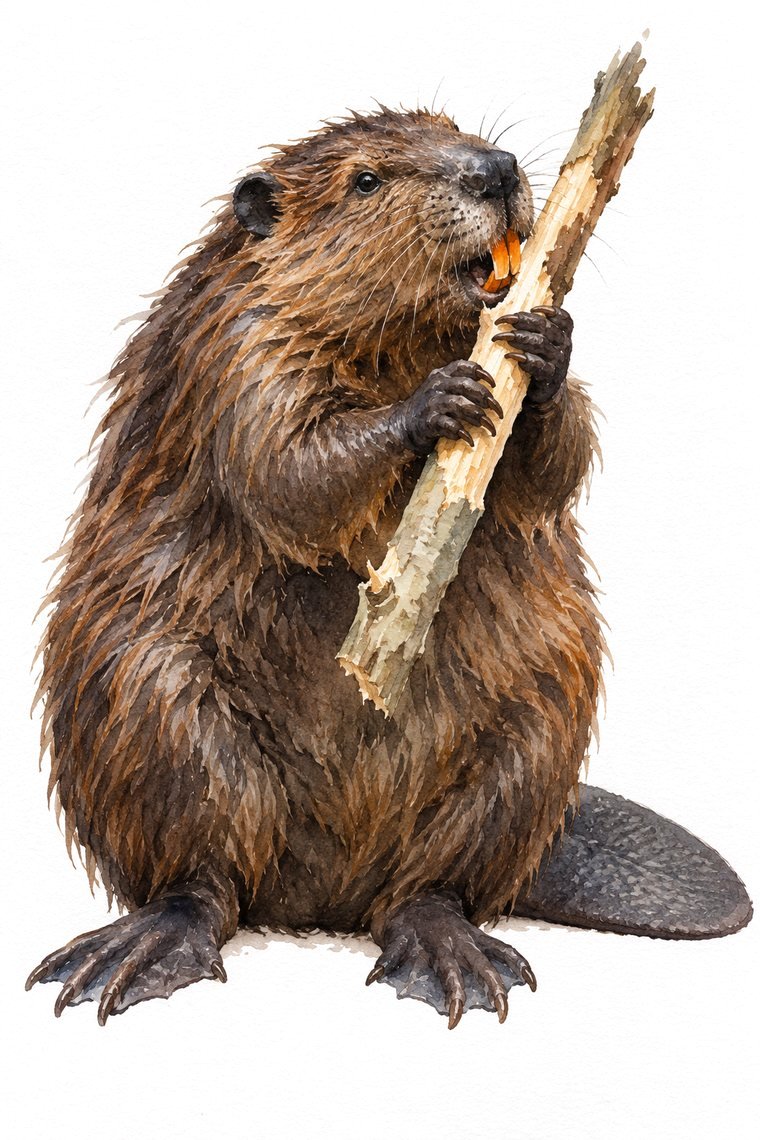
El castor americano es un roedor semiacuático grande y pesado, de lomo arqueado y pelaje denso y brillante, café oscuro. Es nativo de Norteamérica, incluido el norte de México, pero en la Patagonia austral es una especie invasora. En 1946 se liberó un grupo pequeño, de unos veinte animales según la mayoría de las fuentes, en el sector argentino de la Isla Grande de Tierra del Fuego, con la idea de crear una industria peletera.The American beaver is a large, heavy semiaquatic rodent, with an arched back and a dense, glossy dark brown coat. It is native to North America, northern Mexico included, but in southern Patagonia it is an invasive species. In 1946 a small group, some twenty animals according to most sources, was released on the Argentine side of the Isla Grande de Tierra del Fuego, with the idea of creating a fur industry.
Sin depredadores naturales y con bosques de lenga y ñirre a su alcance, se expandió por toda la isla, pasó al sector chileno, a las islas vecinas como Navarino y cruzó al continente. Hoy es uno de los cambios más visibles del paisaje fueguino: arroyos convertidos en lagunas, bosques muertos en pie y terrenos inundados donde antes había bosque.With no natural predators and with lenga and ñirre forests within reach, it spread across the whole island, crossed into the Chilean side, reached neighboring islands such as Navarino and made it to the mainland. Today it is one of the most visible changes in the Fuegian landscape: streams turned into ponds, dead forests still standing, and flooded ground where there used to be forest.
El problema no es sólo que corte árboles. Los bosques de Nothofagus no evolucionaron con un animal así, y muchas zonas inundadas por sus represas no vuelven a ser bosque, sino que quedan como praderas o pantanos. Por eso Chile y Argentina firmaron en 2008 un acuerdo binacional para restaurar los ecosistemas afectados y avanzar hacia su erradicación.The problem is not only that it fells trees. The Nothofagus forests did not evolve with an animal like this, and many areas flooded by its dams never go back to being forest; they stay as grassland or marsh. That is why Chile and Argentina signed a binational agreement in 2008 to restore the affected ecosystems and move toward eradication.
Datos curiososWorth knowing
Pocos fundadoresFew founders
Toda la población de la Patagonia austral desciende de un grupo de alrededor de veinte animales liberados en 1946. Las fuentes no coinciden en la cifra exacta ni en el punto de liberación.The whole population of southern Patagonia descends from a group of around twenty animals released in 1946. Sources do not agree on the exact figure or on the release point.
Paisaje rediseñadoA redesigned landscape
Sus represas cambian el curso de los ríos y crean lagunas visibles desde el aire. En Tierra del Fuego es fácil encontrar valles enteros con árboles muertos en pie por la inundación.Its dams change the course of rivers and create ponds visible from the air. In Tierra del Fuego it is easy to find whole valleys with dead trees still standing from the flooding.
Acuerdo entre paísesAn agreement between countries
Chile y Argentina firmaron en 2008 un acuerdo binacional para restaurar los ecosistemas dañados por el castor en la Patagonia austral.Chile and Argentina signed a binational agreement in 2008 to restore the ecosystems damaged by the beaver in southern Patagonia.
Cómo reconocerlaHow to recognize it
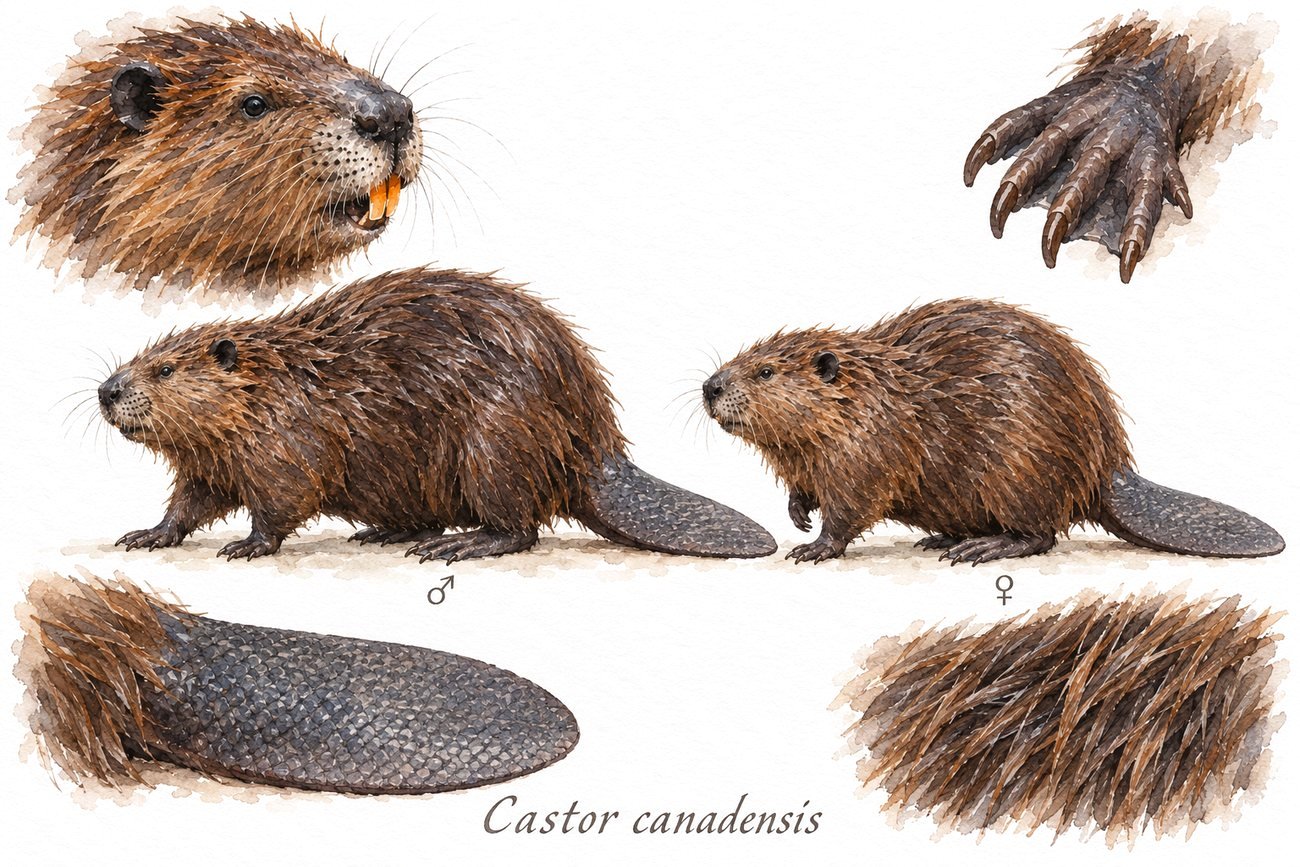
Si ves un animal grande nadando bajo en el agua, con sólo la cabeza afuera y dejando una estela en V, en un arroyo o laguna de Tierra del Fuego o Magallanes, lo más probable es que sea un castor. La prueba definitiva es la cola: ancha, plana, negra y cubierta de escamas, como un remo. Si no lo ves, sus rastros son inconfundibles: troncos roídos en punta de lápiz, represas de palos y barro, y lagunas con árboles muertos en pie.If you see a large animal swimming low in the water, with only the head out and leaving a V-shaped wake, in a stream or pond in Tierra del Fuego or Magallanes, it is most likely a beaver. The conclusive proof is the tail: broad, flat, black and covered in scales, like a paddle. If you do not see it, its traces are unmistakable: trunks gnawed to a pencil point, dams of sticks and mud, and ponds with dead trees still standing.
SeñasField marks
Cola de remoPaddle tail
Ancha, aplanada de arriba abajo, sin pelo y con escamas negras. Ningún otro animal de la zona la tiene.Broad, flattened top to bottom, hairless and with black scales. No other animal in the area has it.
Dientes anaranjadosOrange teeth
Incisivos grandes y de color naranja intenso, visibles al frente de un hocico ancho y romo.Large incisors of an intense orange, visible at the front of a broad, blunt muzzle.
Troncos en punta de lápizTrunks cut to a pencil point
Tocones de lenga o ñirre roídos en forma de cono, con astillas alrededor. Es la señal más común de su presencia.Lenga or ñirre stumps gnawed into a cone, with chips around them. It is the commonest sign of its presence.
Represas y lagunasDams and ponds
Diques de ramas y barro que cortan arroyos y forman lagunas, a menudo con una madriguera en forma de domo de palos.Dikes of branches and mud that block streams and form ponds, often with a dome-shaped lodge of sticks.
TamañoSize
Mucho más grande que cualquier otro roedor de la zona: cerca de un metro contando la cola y entre 14 y 27 kg.Much larger than any other rodent in the area: close to a meter counting the tail, and between 14 and 27 kg.
Cuándo verlaWhen to see it
Todo el añoAll yearAl atardecerAt duskResidenteResident
Está todo el año. Es más fácil verlo al atardecer en primavera y verano. En invierno, con las lagunas congeladas, pasa más tiempo bajo el hielo y en la madriguera.It is present all year. It is easiest to see at dusk in spring and summer. In winter, with the ponds frozen, it spends more time under the ice and in the lodge.
Dónde buscarlaWhere to look
Arroyos y lagunas dentro o al borde del bosque de lenga y ñirre en Tierra del Fuego, Navarino y el sur de Magallanes. Busca un dique de palos, espera en silencio en la orilla al atardecer y mira la superficie de la laguna que se forma detrás.Streams and ponds inside or along the edge of lenga and ñirre forest in Tierra del Fuego, Navarino and southern Magallanes. Look for a dam of sticks, wait quietly on the bank at dusk and watch the surface of the pond that forms behind it.
No la confundas conDo not confuse it with
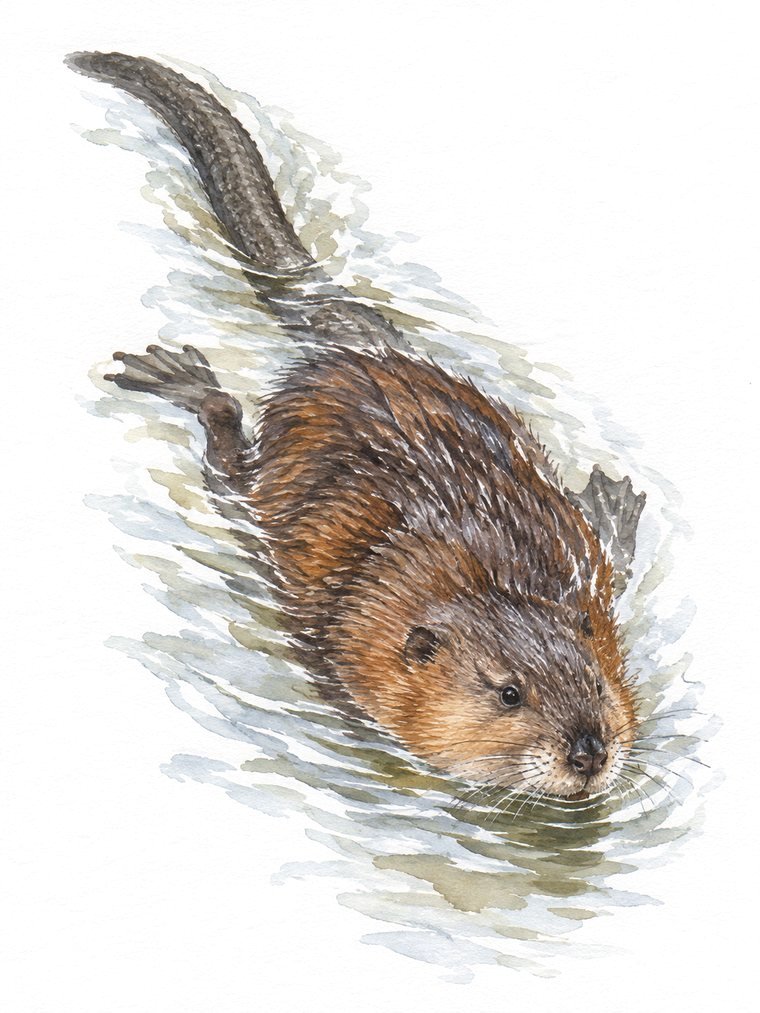
Rata almizcleraMuskrat
También es un roedor semiacuático introducido en Tierra del Fuego y nada en arroyos y lagunas. Es mucho más pequeña, del tamaño de un conejo chico, y su cola es delgada y aplanada de lado, no ancha y plana como un remo.Also a semiaquatic rodent introduced to Tierra del Fuego, and it swims in the same streams and ponds. It is much smaller, the size of a small rabbit, and its tail is thin and flattened side to side, not broad and flat like a paddle.
Ver su fichaSee its sheetCoipo
Roedor grande, pardo y nadador, con incisivos anaranjados. El coipo tiene la cola larga, redonda y con poco pelo, como la de una rata, y bigotes blancos muy largos; no construye represas.A large brown swimming rodent with orange incisors. The coypu has a long, round, sparsely haired tail, like a rat's, and very long white whiskers; it does not build dams.
Más sobre esta especieMore about this species+
Macho y hembraMale and female
Macho y hembra son iguales por fuera; en terreno no se pueden distinguir.Male and female look the same from outside; in the field they cannot be told apart.
JuvenilJuvenile
Las crías del año son mucho más pequeñas y suelen verse cerca de la madriguera junto a los adultos.The year's kits are much smaller and are usually seen near the lodge alongside the adults.
VozVoice
Más que un sonido vocal, lo que se escucha es el golpe seco y fuerte de la cola contra el agua cuando se asusta, una señal de alarma para el resto del grupo.More than a vocal sound, what you hear is the hard, loud slap of the tail on the water when it is startled, an alarm signal for the rest of the group.
ComportamientoBehaviour
Vive en grupos familiares que ocupan un tramo de río o una laguna. Es activo sobre todo al atardecer y de noche. Corta árboles para comer su corteza y para construir represas que elevan el nivel del agua, lo que le permite moverse nadando y proteger la entrada de su madriguera, que queda bajo el agua. Cuando se alarma golpea el agua con la cola antes de sumergirse.It lives in family groups that hold a stretch of river or a pond. It is active above all at dusk and by night. It fells trees to eat their bark and to build dams that raise the water level, which lets it move by swimming and protects the entrance to its lodge, which lies underwater. When alarmed it slaps the water with its tail before diving.
DietaDiet
Es herbívoro. Come corteza, brotes y ramas de árboles y arbustos, en Tierra del Fuego sobre todo de lenga y ñirre, y también plantas acuáticas y herbáceas de la orilla.It is a herbivore. It eats bark, shoots and branches of trees and shrubs, in Tierra del Fuego above all lenga and ñirre, as well as aquatic and bankside plants.
ReproducciónBreeding
Forma parejas estables. Tiene una camada al año, que nace en primavera dentro de la madriguera. Los jóvenes se quedan con la familia uno o dos años y después se dispersan a buscar su propio tramo de río, que es como la especie ha colonizado nuevas cuencas.It forms stable pairs. It has one litter a year, born in spring inside the lodge. The young stay with the family for one or two years and then disperse to look for a stretch of river of their own, which is how the species has colonized new catchments.
Origen del nombreWhere the name comes from
Castor viene del latín y del griego kástor, nombre antiguo del castor europeo. Canadensis significa 'de Canadá', por la región de donde se describió.Castor comes from Latin and from the Greek kástor, the old name for the European beaver. Canadensis means 'from Canada', after the region where it was described.
Mitos y erroresMyths and mistakes
Mucha gente cree que el castor come peces. Es completamente herbívoro: corta árboles para comer la corteza y para construir, no para pescar.Many people believe the beaver eats fish. It is entirely herbivorous: it fells trees to eat the bark and to build, not to fish.
AmenazasThreats
En la Patagonia austral no está amenazado: es la amenaza. Su expansión destruye bosque nativo de Nothofagus, altera ríos y turberas, y obliga a programas de control y erradicación en Chile y Argentina.In southern Patagonia it is not threatened: it is the threat. Its spread destroys native Nothofagus forest, alters rivers and peat bogs, and forces control and eradication programs in Chile and Argentina.
Ficha técnicaTechnical sheet+
- Otros nombresOther names
- Castor americano (Chile), Castor americano (Argentina), American beaver (inglés)Castor americano (Chile), Castor americano (Argentina), American beaver (English)
- FamiliaFamily
- Castoridae · Orden:Order: Rodentia
- OrigenOrigin
- Introducida en Chile y Argentina (invasora)Introduced in Chile and Argentina (invasive)
- Dónde viveWhere it lives
- Chile · Regiones: MagallanesChile · Regions: Magallanes
- Dónde viveWhere it lives
- Argentina · Provincias: Tierra del FuegoArgentina · Provinces: Tierra del Fuego
8 fuentes8 sources+
- La difícil misión de erradicar la plaga de castores en la Patagonia chilena (The Clinic)
- Tesis doctoral Jusim (UBA) sobre el castor en Tierra del Fuego
- Folleto proyecto GEF castor (MMA Chile)
- Estudio de factibilidad de erradicación del castor (Legislatura de Tierra del Fuego)
- Distribución: GBIF (gbif_cubo_abiertas_2026-10) y GBIF (gbif_occurrences_2026-09-14)Distribution: GBIF (gbif_cubo_abiertas_2026-10) and GBIF (gbif_occurrences_2026-09-14)
- Retrato: ilustración de Explora, generada con IA y revisada por el equipo.Portrait: illustration by Explora, generated with AI and reviewed by the team.
- Lámina: ilustración de Explora, generada con IA y revisada por el equipo.Plate: illustration by Explora, generated with AI and reviewed by the team.
- Texto: Explora, redactado con asistencia de IA.Text: Explora, written with AI assistance.
Otras de mamíferos terrestresMore land mammals